
When we think about school, we often think about academic goals: reading levels, maths skills, grammar rules. But education has always been more than that.
School is one of the first spaces where children learn how to live with others.
Teaching kindness, empathy, and respect in school is not a separate subject—it is part of meaningful education. These values help children understand themselves, relate to others, and feel safe in a shared learning environment.
Children are constantly learning from what they experience, observe, and practice. When schools intentionally create spaces to talk about kindness, friendship, and emotions, children begin to understand:
These skills are essential not only in school, but in families, workplaces, and communities. Emotional learning helps children grow into confident, respectful, and socially aware individuals.
According to research in social-emotional learning, students who develop empathy and emotional awareness tend to show improved relationships and stronger academic engagement. Education that includes emotional development creates balanced learners, not just high achievers.
Moments like Valentine’s Day are often seen only through a romantic lens, but in education, they offer a beautiful opportunity to explore deeper values. Friendship, kindness, gratitude, and respect are universal themes that children can easily relate to.
Seasonal learning allows educators and parents to connect lessons to real-life experiences. When values are taught in context, they feel natural rather than forced. Children understand them not as rules, but as meaningful ideas they can practice daily.
This is why intentional teaching during specific moments of the year leaves a lasting impact.
As adults guiding children, our role goes beyond teaching content. We are shaping the way they see the world and relate to others.
It’s worth pausing to reflect:
These questions are not meant to overwhelm us. They are gentle reminders of the kind of environment we are creating each day.
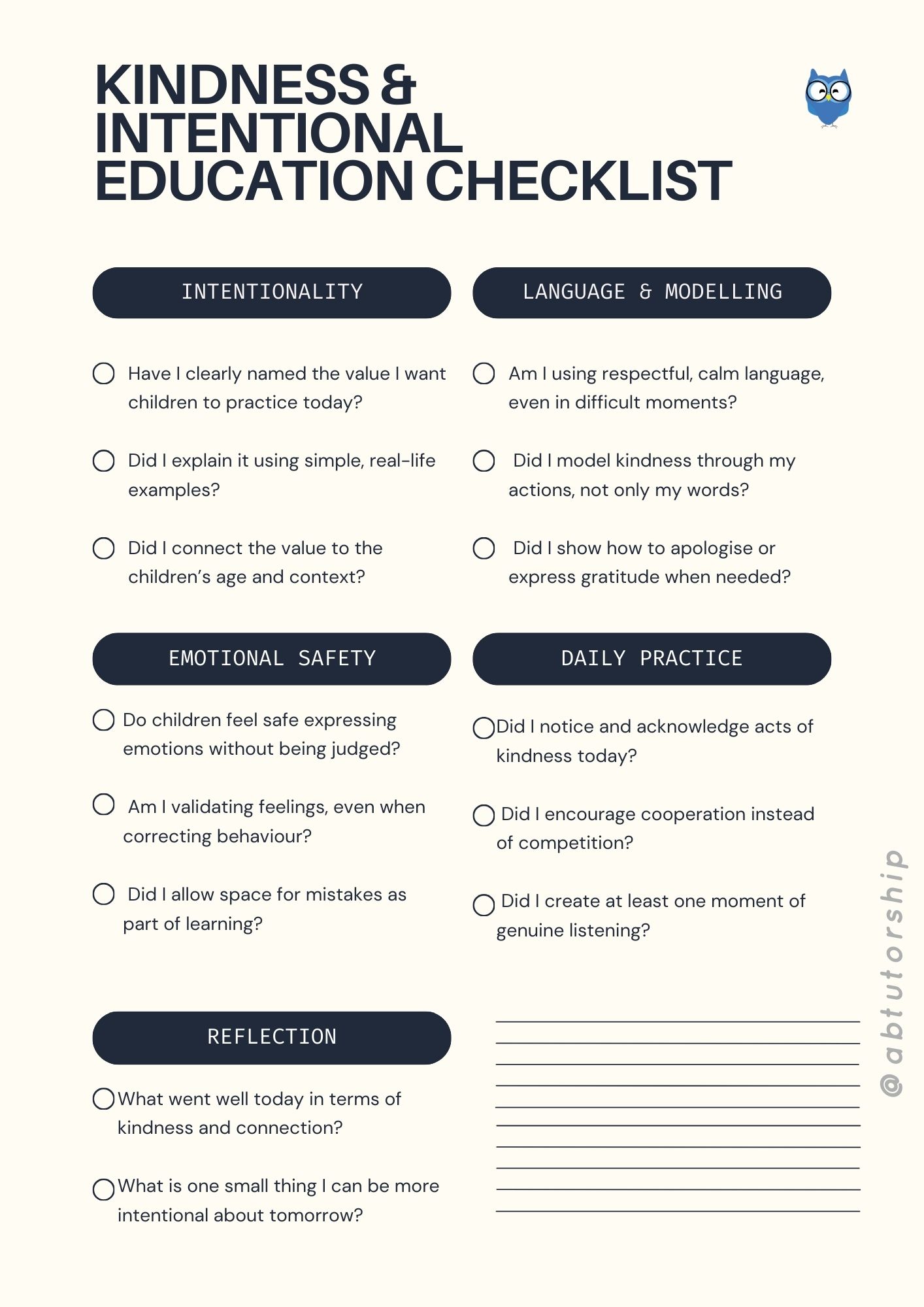
Many educators and parents find it helpful to have a simple reference nearby—something visible that brings them back to intention when routines get busy or challenging. A printed checklist can serve as a quiet guide, helping us stay aligned with the values we want children to experience, not just hear about.
Below is a Kindness & Intentional Education Checklist designed to support daily practice at school or at home. It’s not about perfection, but about awareness, consistency, and reflection.
Facts may change, but values remain. When kindness and empathy are part of a child’s education, they become tools for life.
Teaching with intention means teaching for the long term.
📖 If you enjoy thoughtful, intentional education, you can explore more reflections and practical ideas on our blog.
🎙️ You’re also invited to listen to the ABT Podcast, where we talk and reflect deeply about education, learning, and the challenges children and young people face today.